 Bangladesh is in the middle of a heatwave. In early June 2026, the Bangladesh Meteorological Department recorded mild to moderate heatwave conditions across 40 districts, including the capital Dhaka, stretching across Rajshahi, Rangpur, Khulna, and Barishal divisions. The monsoon, which typically brings relief by this time of year, has been delayed and is expected to deliver below-average rainfall this season. Day labourers and low-income workers (those without access to air conditioning or the option to work from home) are bearing the sharpest edge of that heat.
This is not an isolated weather event. It is part of a long and measurable pattern. According to research cited by The Business Standard, Dhaka alone has experienced a temperature rise of nearly 3°C over the past two decades. In 2024, Bangladesh recorded more than 700 heat-related deaths, among the highest in the country’s recorded history. The Bangladesh Meteorological Department now maintains a four-tier heatwave classification system, ranging from mild to extreme. The existence and regular activation of that system tells its own story about how Bangladesh’s climate has shifted. That shift is happening in a country that contributes less than 0.5% of global cumulative greenhouse gas emissions.
Where We Are on 1.5°C
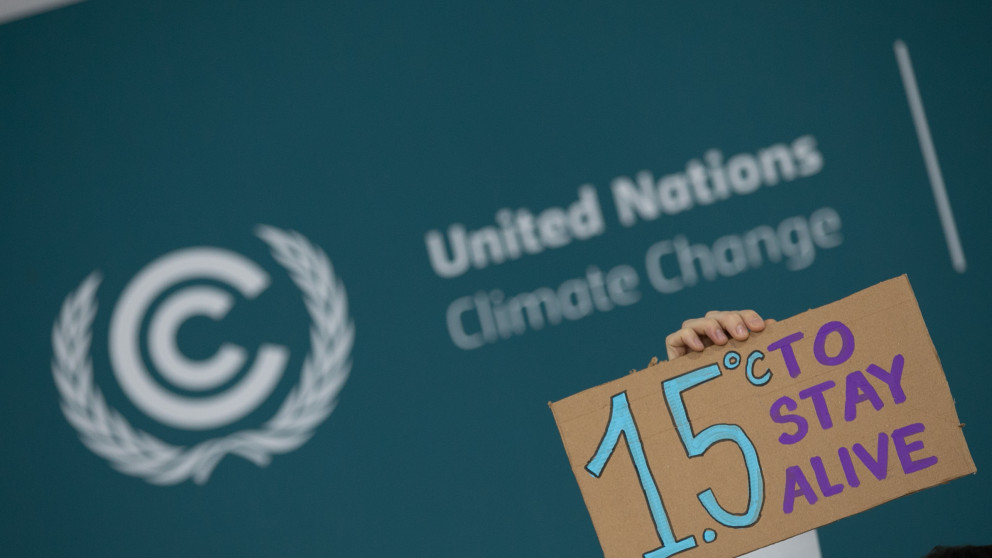
The Paris Agreement, signed in 2015, set a goal of limiting long-term global warming to 1.5°C above pre-industrial levels (defined as the 1850–1900 average). For nations like Bangladesh, that threshold was never just a scientific benchmark. It was the number that separated difficult adaptation from irreversible loss.
The data now shows how close we are to crossing it, and in some measures, how far we already have. The World Meteorological Organization confirmed that 2024 was the warmest year in 175 years of observational records, with a global mean surface temperature of 1.55°C above the pre-industrial baseline. The year 2025 followed as the second or third warmest on record, at approximately 1.43°C above the same baseline. The WMO’s five-year forecast (2025–2029) projects a 70% probability that the average temperature across those five years will exceed 1.5°C, and an 86% chance that at least one individual year in that period will breach the threshold.
Scientists rightly point out that the Paris Agreement’s 1.5°C goal refers to long-term averages measured over decades, not individual years. A single warm year does not technically constitute a failure of the agreement. But consecutive record-breaking years are not statistical noise. Eleven of the twelve warmest years on record have now occurred between 2015 and 2025. They are a trajectory. And for countries already living with the consequences of that trajectory, the technical distinction between a temporary overshoot and a permanent breach is increasingly difficult to sustain.
The Cost Is Not Distributed Equally
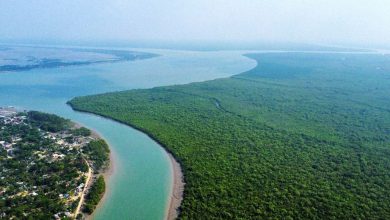
Climate change does not affect all countries proportionally to their contributions to it. This is among the most documented and least acted-upon facts in global climate policy. Bangladesh is a case study in that disparity. The country sits at the confluence of three major rivers: the Ganges, the Brahmaputra, and the Meghna, making it one of the most flood-prone nations on earth. Rising sea levels are accelerating saltwater intrusion into agricultural land in coastal areas. Cyclone intensity in the Bay of Bengal has increased with rising sea surface temperatures. River erosion, exacerbated by intensified rainfall and altered river flows, displaces hundreds of thousands of people each year, quietly and without the international attention that more visually dramatic disasters tend to receive.
Heat adds another layer. Bangladesh’s economy depends heavily on outdoor labour: agriculture, construction, rickshaw driving, and small-scale trade. When temperatures rise beyond safe working thresholds, the economic cost falls directly on those least able to absorb it. A day labourer in Rajshahi who stays indoors during a heatwave does not receive paid leave. They simply earn nothing. This is what loss and damage looks like in practice; not as a line in a UN negotiating text, but as a daily arithmetic of survival that millions of people across the Global South are already doing.
What COP31 Must Confront
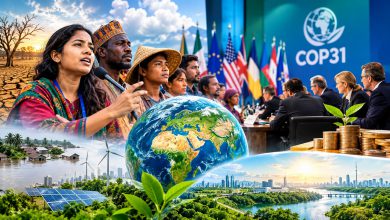
In November 2026, delegates will gather in Antalya, Turkey, for COP31. Australia’s Minister for Climate Change and Energy, Chris Bowen, will lead the negotiations under a shared presidency arrangement with Turkey. The stated agenda focuses on implementation: turning previous COP commitments into verifiable national action. That focus is overdue. But implementation must be measured against the right standard. The question is not only whether governments have submitted updated climate plans. It is whether those plans are closing the gap between current emissions trajectories and what the science requires.
On that measure, the record is poor. The United Nations Environment Programme’s Emissions Gap Report has consistently found that existing national pledges fall well short of the reductions needed to limit warming to 1.5°C. The loss and damage fund, established at COP27 and operationalised at COP28, remains underfunded relative to the scale of need. And both COP31 host nations carry significant domestic credibility problems: Australia is the world’s third-largest exporter of fossil fuels, and Turkey still generates roughly one-third of its electricity from coal, with new coal capacity reportedly still in planning.
A presidency asking other countries to transition away from fossil fuels while continuing to expand them at home faces an obvious question of consistency. Civil society organisations have already raised it. In June, 94 organisations from Turkey and Australia jointly signed a statement calling on both governments to develop domestic fossil fuel phase-out roadmaps before Antalya. The statement makes clear that international credibility and domestic policy are not separate issues.
The Gap Between the Number and the Reality
The 1.5°C threshold gave the international community a clear, communicable goal. That clarity has been genuinely useful; it has focused scientific research, galvanised public campaigns, and given negotiators a shared reference point. But a number is only useful if it drives action proportionate to what it represents.
At the current rate of emissions, the remaining carbon budget for limiting warming to 1.5°C with a 50% probability would be exhausted before 2030, according to UNEP and the Global Carbon Project. That is not a distant warning. It is a near-term deadline.
For Bangladesh, the heatwave currently baking 40 districts is not a preview of what climate change might bring. It is a measure of what years of insufficient action have already produced. The country has adapted through flood-resistant agriculture, cyclone shelters, and mangrove restoration, and will continue to adapt. But adaptation has limits. The science is explicit that beyond certain temperature thresholds, some losses become irreversible.
COP31 will be assessed not by the ambition of its opening speeches, but by whether the decisions taken in Antalya meaningfully narrow the gap between where emissions are heading and where they need to go. For the people already living in that gap, in Bangladesh, in the Pacific, and across the Global South, there is limited patience left for processes that produce commitments without consequences.
The 1.5°C target was meant to be a limit. The data suggests it is becoming a threshold we are passing through. What happens on the other side of it will not be felt equally. That inequality is the central challenge that COP31 has not yet found a way to honestly address.
Writer: K M Dhrubo, Journalist and Climate Activist, Australian Youth Climate Coalition (AYCC)
Email: infokmdhrubo@gmail.com